Socket
Hexagon Socket / Wrench Socket – Maintenance Tool for Waterjet Systems
Description:
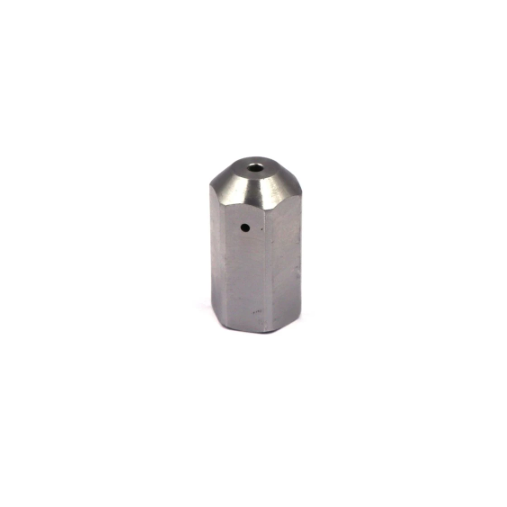
This component is a hexagon drive socket, commonly referred to as a wrench socket or impact socket, used for the installation and removal of gland nuts, hexagon socket head cap screws, and other hexagon-headed fasteners on waterjet cutting equipment. It is a tool component designed to interface between a torque wrench, ratchet, or impact driver and the fastener.
Applications:
Used to tighten and loosen gland nuts on high-pressure nozzle tubes, mixing tubes, and sealing head assemblies.
Used to install and remove hexagon socket head cap screws on intensifier pumps, high-pressure cylinders, check valves, dump valves, and pump frame assemblies.
Suitable for scheduled preventive maintenance, emergency repairs, and complete pump overhauls on both pure water and abrasive waterjet systems.
Features:
Manufactured from high-strength chrome vanadium steel, chrome molybdenum steel, or impact-rated alloy steel for durability under high torque.
Precision-machined hexagon drive opening provides a tight fit on fastener heads to prevent rounding, slipping, or damage to fasteners.
Available in standard imperial (inch) and metric (mm) sizes to match common waterjet fasteners, including 1/4", 3/8", 1/2", 3/4" drives and corresponding hex sizes.
May feature a recessed or deep-length design for accessing recessed hex socket screws or extended studs.
Corrosion-resistant black oxide or chrome plating finish for long service life in wet operating environments.
Laser-etched or stamped size markings for quick identification during maintenance procedures.
Maintenance:
Before each use, inspect the hexagon drive opening for wear, rounding, cracking, or deformation.
Inspect the square drive end (connection to ratchet or torque wrench) for wear or damage that could affect torque transfer.
Replace any socket that shows signs of wear, rounding, or cracking to prevent damage to expensive waterjet fasteners and components.
Clean sockets thoroughly after each use to remove abrasive dust, metal debris, moisture, and hydraulic fluid.
Do not use standard chrome sockets on impact wrenches; use impact-rated sockets for impact tool applications.
Store sockets in a clean, dry tool chest or organizer, preferably with size markings visible, to prevent corrosion and loss.
Apply light machine oil to sockets periodically to prevent rust in high-humidity workshop environments.
Never use a socket that is cracked or deformed; a failed socket can cause personal injury and damage equipment.