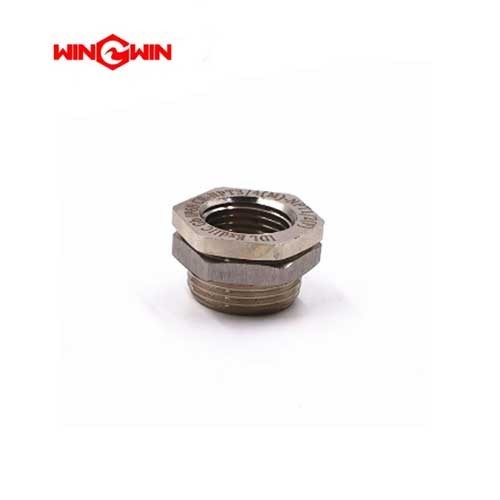
10070092 Water Jet Pump Jam Nut, 1-14
Product Name: Jam Nut, 1-14 (Part No. 10070092)
Description:
This component is a 1-14 jam nut, a thin-profile hexagonal nut specifically designed for use in waterjet cutting system assemblies. The "1-14" designation indicates a nominal thread size of 1 inch with 14 threads per inch (TPI), typically corresponding to UNF (Unified Fine) or UNS (Unified Special) thread standards. Unlike a standard full-height hex nut, a jam nut is thinner, making it ideal for applications where space is limited or where it serves as a secondary locking device.
According to the official parts diagram for the Oil/Water Heat Exchanger Kit (Assembly 72156272), this jam nut is listed as Item 7 with a quantity of 2 required per assembly . This confirms its critical role as a fastening and locking component in the thermal management system of waterjet cutting equipment.
The primary function of a jam nut is to provide a locking mechanism when tightened against another nut or against the face of a component. This "jamming" action prevents loosening due to vibration and pressure cycling inherent in waterjet intensifier operation. When used as a locking device, the jam nut is first tightened against the primary nut, creating friction that resists movement. Alternatively, a single jam nut can be used in space-constrained applications where a full-height nut will not fit, or on threaded studs where only minimal thread engagement is required.
Applications:
Secures and locks components in the Oil/Water Heat Exchanger Kit (Assembly 72156272)
Provides locking action against another nut to prevent loosening from vibration and pressure cycling in waterjet cooling systems
Serves as a thin-profile fastener in space-constrained hydraulic and cooling system connections
Used as a locknut for adjusting and securing threaded components such as pressure switches, sensors, and valve stems
Suitable for 60,000-94,000 PSI (approximately 4,137-6,480 bar) waterjet systems
Used on 1-inch diameter threaded studs or bolts (14 TPI) in hydraulic power packages and heat exchanger assemblies
Features:
1-14 Thread Size: 1 inch nominal diameter with 14 threads per inch for compatibility with standard 1-14 UNF/UNS threaded components
Jam Nut (Thin Profile) Configuration: Thin design allows for use in space-constrained applications and provides effective locking action when jammed against another nut
Hexagonal Shape: Standard hex configuration for use with standard wrenches
High-Strength Material: Manufactured from high-strength steel or stainless steel with corrosion-resistant finish to withstand waterjet environments
Vibration Resistance: When properly torqued as a jam nut pair, prevents loosening under high-frequency vibration and pressure pulsation
Precision Threads: CNC-machined internal threads to exact dimensional specifications for consistent fit and reliable torque performance
Corrosion-Resistant Finish: Surface treated (e.g., zinc plating or similar) to resist corrosion from water and hydraulic fluid exposure
Direct OEM Replacement: Interchangeable with manufacturer specifications as listed in the official parts diagram
Maintenance:
Failure Diagnosis (When to Replace):
Thread Damage: Stripped, galled, or corroded threads prevent proper tightening and must be replaced immediately
Visible Cracks or Deformation: Any cracking or distortion of the nut warrants immediate replacement
Difficult Assembly: If the nut requires excessive force or feels gritty during threading, threads may be damaged
Loose Connection: If the jam nut fails to maintain locking action and becomes loose during operation, inspect threads for wear
Corrosion: Heavy rust or pitting that compromises material integrity
Scheduled Overhaul: During major pump rebuilds, it is best practice to replace high-stress fasteners rather than reusing them
Inspection and Replacement Guidelines:
Full Depressurization (Critical): Before any maintenance, place the main electrical disconnect in the OFF position, fully depressurize both the hydraulic system and the high-pressure water system, and follow lockout/tagout procedures
Proper Jam Nut Usage (Critical): For locking applications, use two wrenches — one to hold the primary nut and one to tighten the jam nut against it. This creates a secure lock that prevents loosening under vibration
Torque Compliance: Tighten the jam nut to the specific torque value listed in the equipment service manual using a calibrated torque wrench. For locking applications, the jam nut torque must be coordinated with the primary nut
Thread Preparation: Clean all threads thoroughly before assembly. Remove all debris, old thread-locking compound, and corrosion
Thread Lubrication: Apply a thin, even layer of high-pressure anti-seize lubricant to the threads during reassembly to prevent galling and ensure accurate torque application
Use Proper Tools: Use the correctly sized wrench on the nut's flats. Do not use pipe wrenches or pliers that could damage the nut surfaces
Replacement Criteria: Replace the nut immediately if threads are damaged, cracks are visible, the nut shows signs of deformation, or if the jam nut has been overtightened or cross-threaded
Replace as a Set: When using jam nuts in a locking pair, replace both nuts simultaneously rather than individually
Check Mating Threads: Before installing a new jam nut, inspect the mating bolt, stud, or threaded component for thread damage. Damaged mating threads will compromise the locking action even with a new nut
Locking Verification: After final torque, verify the jam nut is securely locked against the primary nut and shows no signs of loosening under operational conditions
Cross-Reference Information: 10070092 is listed as Item 7 in the Oil/Water Heat Exchanger Kit (Assembly 72156272) with a quantity of 2 required per assembly