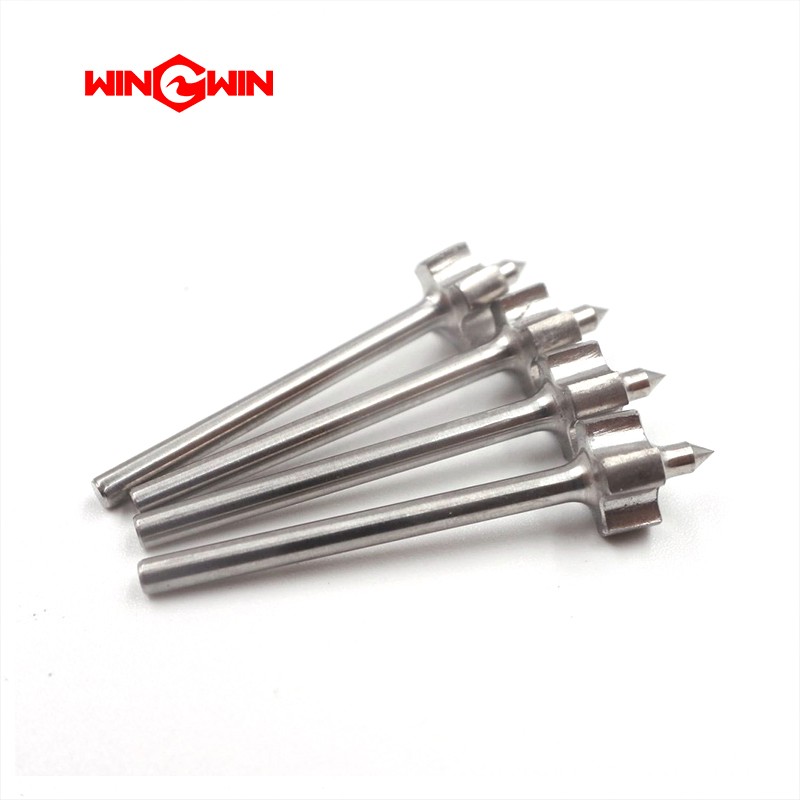
APW Water On/Off Valve Needle
Product Name: APW Water On/Off Valve Needle
Description:
This component is a water on/off valve needle, also known as a valve stem or poppet, specifically designed for APW series waterjet cutting systems. It is a precision-machined, stem-type sealing component that serves as the moving element within the pneumatic water switch valve assembly. The valve needle works together with the valve seat to create a leak-tight seal, controlling the flow of ultra-high-pressure water from the pump to the cutting head.
Applications:
Used as the primary sealing element within the pneumatic on/off valve assembly of APW waterjet cutting heads
Controls the start and stop of high-pressure water flow to the cutting head during cutting operations
Suitable for ultra-high pressure waterjet systems, typically operating at 60,000 PSI (approximately 4,137 bar)
Features:
Precision-Ground Sealing Surface: Machined to exact specifications for leak-tight shut-off when mated with the corresponding valve seat
High-Strength Construction: Manufactured from wear-resistant hardened stainless steel to withstand repeated impact and high-velocity water flow
Critical Consumable Component: Designed as a high-wear part that protects the more expensive valve body from damage
Pneumatic Actuation Compatibility: Designed to be driven by the pneumatic cylinder mounted above the valve body
Maintenance:
Leak Testing: After installation, test high-pressure for 10 seconds to verify no water leakage before resuming normal cutting operations
Adjustment Procedure: After tightening the pneumatic cylinder hand-tight, rotate back 360 degrees, then advance 180 degrees half-turn, testing air valve operation to confirm proper tension
Simultaneous Replacement: When replacing the valve needle, always replace the corresponding valve seat and seals simultaneously
Lubrication: Apply a small amount of hydraulic oil to the needle during installation to prevent dry operation
Full Depressurization: Always fully depressurize the waterjet system and follow lockout/tagout procedures before servicing