400126-1-Water-Guage-80000-PSI-H2O-waterjet
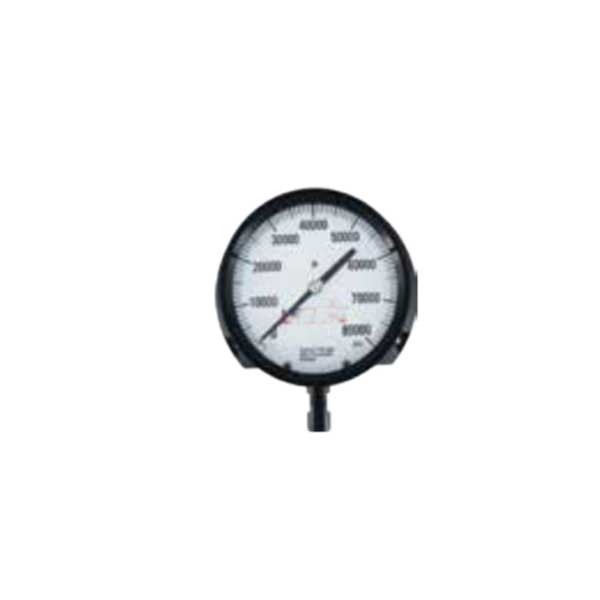
Product Name: High-Pressure Gauge (80,000 psi) – Part No. 400126-1
Description:
This component is a dial-indicating pressure gauge designed for the ultra-high pressure water circuit of a waterjet cutting system . The scale on the face of this gauge indicates a maximum pressure reading of 80,000 psi (pounds per square inch), making it suitable for monitoring systems typically operating at 60,000 PSI (4,137 bar) with a built-in safety margin for transient pressure spikes.
This gauge is a critical instrument for the operator, providing real-time feedback on the system's cutting pressure. It allows for precise monitoring of the intensifier pump's output and helps in diagnosing performance issues such as seal wear, nozzle degradation, or pump malfunctions .
Applications:
Installed on the high-pressure outlet manifold of the waterjet intensifier pump.
Monitors the dynamic cutting pressure supplied to the cutting head.
Used by the operator to verify that the system is operating within the required pressure parameters for specific materials.
Essential for troubleshooting pressure loss, erratic pump behavior, or verifying the correct operation of the pressure relief valve.
Features:
High-Pressure Range: 0 to 80,000 psi scale for compatibility with 60k-90k PSI waterjet systems .
High-Contrast Dial: White background with black markings for clear visibility, even in industrial lighting conditions .
Safety Construction: Typically features a solid front safety case with a blow-out back to protect the operator in the event of an internal failure, compliant with EN 837-1 safety standards .
Corrosion-Resistant Wetted Parts: NiFe alloy and 316L stainless steel components in contact with the water media ensure longevity and resistance to corrosion .
Glycerine Filled (Often): Many high-pressure gauges are liquid-filled (glycerine) to dampen pointer vibration caused by the pulsating flow from the intensifier pump, ensuring a stable, readable display .
Accuracy: High accuracy (typically ±1% of full scale) is essential for precise process control and diagnostic reliability .
Maintenance:
When to Replace (Failure Diagnosis):
Zero Offset: When the pump is off and the system is fully depressurized, the needle must return exactly to the zero stop. If it does not, the internal Bourdon tube is damaged, and the gauge must be replaced immediately .
Erratic Pointer Behavior: A needle that jumps, sticks, or vibrates excessively (beyond normal glycerine-dampened pulsation) indicates internal mechanical wear or damage .
Condensation/Fogging: If the internal window becomes fogged or contains water droplets, the gauge seal has failed, and the reading will likely be inaccurate.
Physical Damage: A cracked lens, dented case, or damaged connection threads warrant immediate replacement to maintain safety.
Inconsistent Readings: If the gauge reading does not correlate with machine performance (e.g., cuts well but reads low, or cuts poorly but reads high), the gauge is faulty.
Usage & Inspection Guidelines:
Zero Verification: Before starting the machine each day, visually check that the gauge reads zero.
Operating Range: Under dynamic cutting conditions (normal operation), the gauge should ideally read within 65% of the dial range (e.g., ~52,000 psi) to maximize the life of the gauge's internal components and maintain accuracy .
System Diagnostics: A gradual drop in pressure at the gauge while the pump is running typically indicates worn high-pressure seals or a clogged nozzle. A sudden drop indicates a possible hose burst or valve failure .
Thread Care: When replacing the gauge, always use a wrench on the flats of the gauge connection (not the case) to tighten it. Apply a small amount of thread sealant to the male threads to prevent high-pressure water leaks.
Full Depressurization (Critical): Always fully depressurize the waterjet system, shut off the water supply, and follow lockout/tagout procedures before removing or installing any pressure gauge.