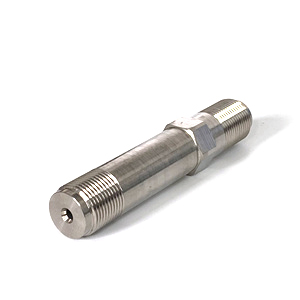
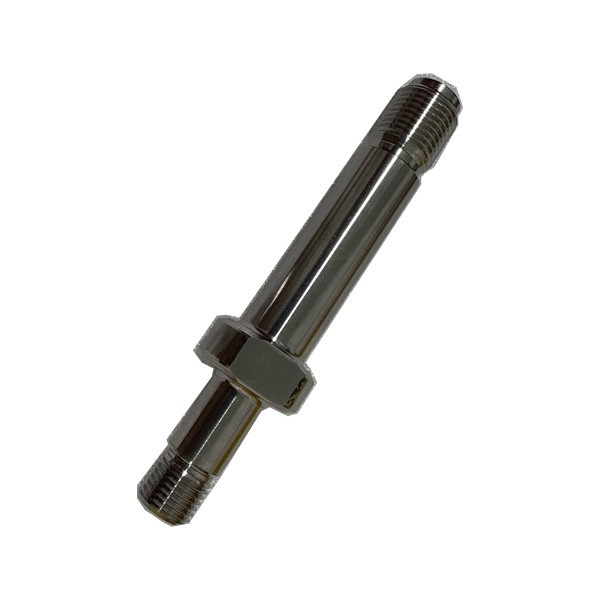
100027-1-Nozzle-Body-Adjustable-P-III-Nozzle-Body
Product Name: Adjustable Nozzle Body, P-III, 15 GPM, 60k (Part No. 100027-1)
Description:
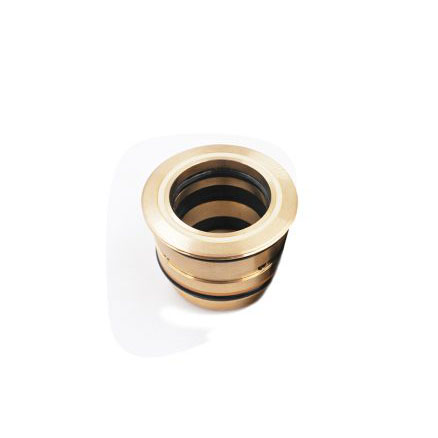
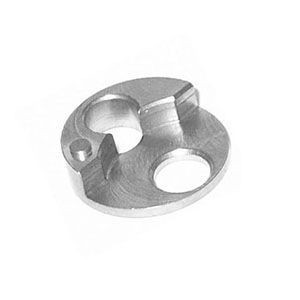
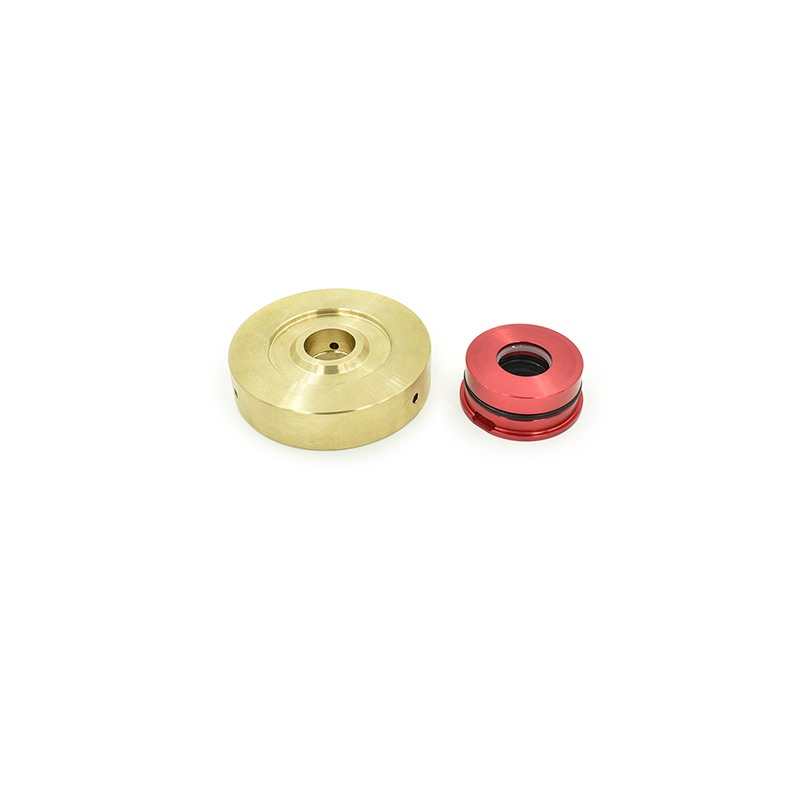
This component is an adjustable nozzle body specifically designed for P-III (P3) series cutting heads in 60,000 PSI (approximately 4,137 bar), 15 GPM abrasive waterjet systems. It features a precision-machined stainless steel body with an adjustable gland mechanism that allows the operator to tighten the internal mixing chamber assembly while maintaining the abrasive feed line orientation in a fixed, desired direction.
This adjustability is critical for ensuring proper abrasive suction (Venturi effect) and consistent cutting performance. The body provides the main structural housing for the mixing chamber, jewel orifice, and mixing tube, serving as the core interface between the high-pressure water line, abrasive feed, and the focusing tube.
Applications:
Serves as the main housing for P-III series abrasive waterjet cutting heads
Used in 60,000 PSI, 15 GPM waterjet systems for precision cutting of metals, stone, glass, and composites
Allows routing of the abrasive feed line in an optimal orientation for various cutting head angles and machine configurations
Compatible with standard P-III nozzle components including mixing tubes, orifices, and retaining nuts
Features:
Adjustable Gland Design: Permits tightening of the internal mixing chamber while keeping the abrasive inlet port oriented in a specific direction, preventing hose binding or kinking
Precision-Machined Stainless Steel Construction: Provides corrosion resistance and structural integrity for ultra-high pressure operation
P-III Series Compatibility: Standardized design ensures interchangeability with P-III style cutting head components
60,000 PSI & 15 GPM Rating: Engineered for continuous ultra-high pressure operation with medium flow capacity
Flow Optimized Internal Geometry: Designed to maintain cohesive water stream for efficient abrasive mixing
Maintenance:
Inspection Protocol:
Visual Inspection: Regularly inspect the nozzle body for external cracks, corrosion, or thread damage
Alignment Check: Ensure the water orifice and mixing tube are properly aligned within the body to prevent uneven wear and maintain cutting performance
Leak Monitoring: Check for water weeping from any body connections; immediate repair prevents erosion damage
Cleaning Procedures:
Debris Removal: Regularly clean the internal passages to remove compacted abrasive or mineral deposits
Orifice Cleaning: Use an ultrasonic cleaner with white vinegar to remove dissolved solids from the orifice interior surface
Avoid Abrasive Tools: Do not use metal tools that could scratch precision sealing surfaces
Component Replacement:
Mixing Tube Rotation: Rotate the mixing tube 90 degrees after every 8 hours of cutting to avoid uneven wear and extend service life
Seal Replacement: Always replace O-rings and high-pressure seals when servicing the nozzle body
Worn Component Replacement: Replace the body immediately if cracks, severe internal erosion, or thread damage is detected
Diamond Jewels: Keep diamond orifices clean to maintain optimal cutting performance
Installation Guidelines:
Adjustment Procedure: Use the adjustable gland feature to tighten the mixing chamber while holding the abrasive inlet in the desired orientation
Lubrication: Apply high-pressure thread lubricant to connections during reassembly to prevent galling
Torque Compliance: Tighten all retaining nuts to the torque values specified in the equipment service manual
Water Quality Considerations:
Test Water Quality: Poor water quality dramatically reduces the lifespan of nozzle assemblies, seals, and high-pressure plumbing
Temperature Management: High water temperature accelerates component wear; consider a water chiller if needed
Filtration: Ensure proper water filtration to prevent contaminant damage to the orifice and mixing chamber
Safety Precautions:
Full Depressurization: Always fully depressurize the waterjet system and follow lockout/tagout procedures before servicing the nozzle body
Clean Work Environment: Perform maintenance in a designated clean area to prevent contamination with abrasive particles
Regular Inspection: Maintenance intervals depend on operating hours; track usage to establish a preventive maintenance schedule