05144183-1
Product ID: 05144183-1 – High-Pressure Cylinder / Intensifier Cylinder Body
Description:
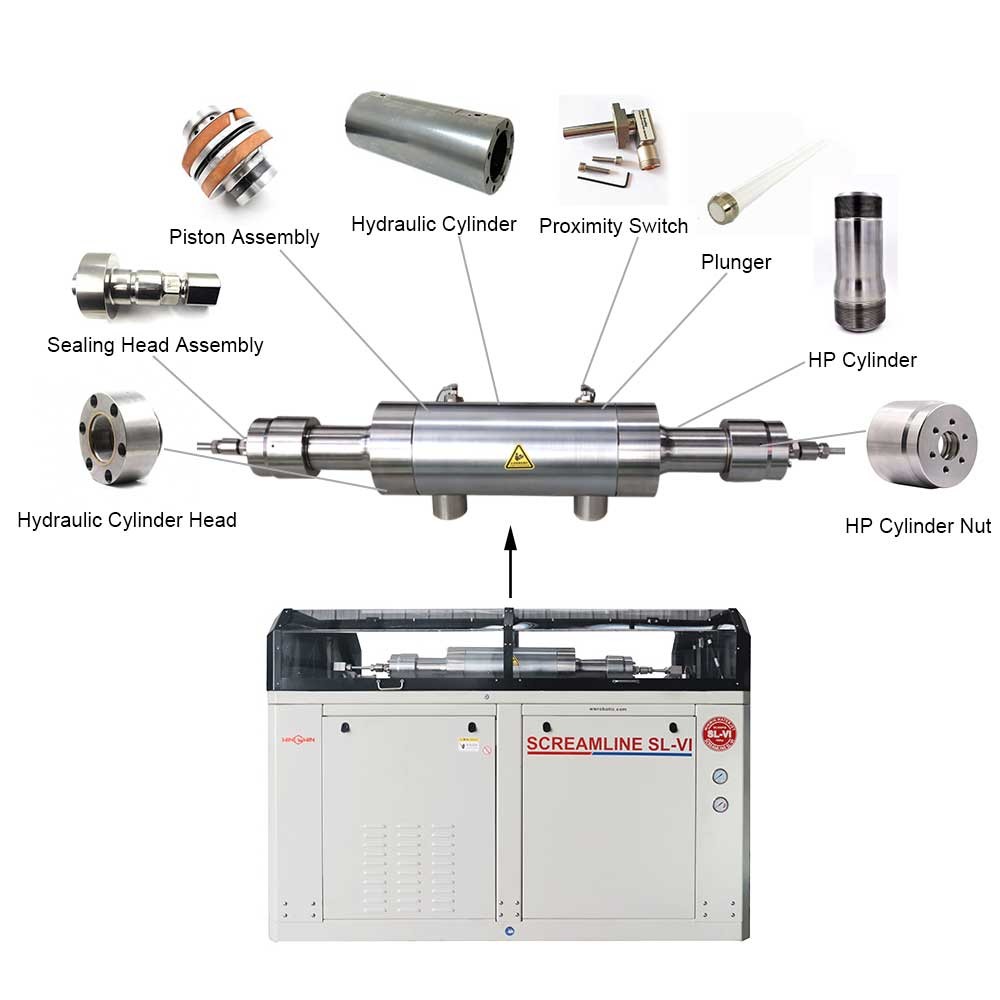
This component is a high-pressure cylinder, specifically an intensifier cylinder body or liner, designed for waterjet cutting systems. It is a precision-machined cylindrical housing that contains the reciprocating plunger or piston assembly and withstands extreme internal pressures generated during waterjet intensification. The "-1" suffix may indicate a specific version, size, or application variant.
Applications:
Used as the primary pressure-containing vessel within an intensifier pump for waterjet cutting machines.
Installed in the high-pressure section of the intensifier where water is compressed to ultra-high pressures (typically 60,000 psi or higher).
Suitable for both pure water and abrasive waterjet systems requiring reliable, fatigue-resistant pressure containment.
Features:
Constructed from high-strength, corrosion-resistant material such as precipitation-hardened stainless steel or high-alloy steel.
Precision-honed internal bore surface to minimize friction and wear on reciprocating seals and plungers.
Designed to withstand cyclic pressure loading from zero to maximum operating pressure at high cycle rates.
Includes threaded ends, flange mounts, or groove features for attachment to cylinder heads, check valve bodies, or end caps.
Engineered with appropriate wall thickness and material properties to meet safety factors for ultra-high pressure service.
Resists stress corrosion cracking and fatigue failure when properly maintained and operated within rated parameters.
Maintenance:
Fully depressurize the waterjet system and disconnect power before removing or servicing the cylinder.
During disassembly, carefully remove the cylinder body from the intensifier frame using proper lifting techniques if the cylinder is heavy.
Inspect the internal bore surface for scoring, galling, pitting, corrosion, or wear caused by seal or plunger contact.
Check all threaded connections and sealing surfaces for damage, deformation, or erosion.
Measure the internal bore diameter at multiple locations to verify dimensional accuracy and detect ovality or taper.
Clean the cylinder bore and exterior surfaces thoroughly using a soft cloth and low-pressure water or compatible solvent.
Inspect the cylinder for external cracks, dents, or signs of previous impact or overtightening.
Replace the cylinder if any bore damage exceeds manufacturer-specified limits or if cracks are detected.
When reinstalling, lubricate seals and threads as specified in the equipment service manual.
Tighten end caps, retainers, or mounting hardware to the torque values provided by the equipment manufacturer.
After reassembly, slowly pressurize the system while observing for leakage or abnormal sounds; do not exceed rated pressure.
Periodically inspect the cylinder during seal replacement intervals to identify wear before failure occurs.