400063-112-End-bell-snap-ring
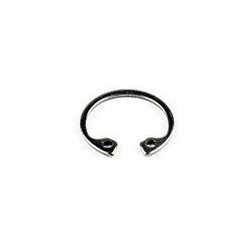
Product Name: End Bell Snap Ring / Retaining Ring (Part No. 400063-112)
Description:
This component is an end bell snap ring, also known as a retaining ring or circlip, specifically designed for the end bell assembly in high-pressure waterjet intensifier pumps . It is a circular fastener manufactured from spring-tempered steel, featuring an open-end design that allows for compression during installation into a precision-machined internal groove within the end bell or hydraulic cylinder housing .
The snap ring functions as a critical mechanical retainer, securing and positioning the oil seals, spacers, and internal components within the end bell assembly . It prevents axial movement of these parts during high-pressure operation, maintaining proper alignment under extreme pressure cycling up to 60,000 PSI (approximately 4,137 bar) .
This component is classified as a "semi-wear part" . Although it does not wear as quickly as seals or pistons, under continuous pressure loads, vibration, and repeated disassembly/reassembly cycles, it may gradually deform, lose clamping force, or become damaged . Proper end bell snap ring function is essential for preventing oil leakage and ensuring the long-term, safe, and reliable operation of the waterjet pump system .
Applications:
Retains oil seals and spacers within the end bell assembly of waterjet intensifier pumps
Secures internal components in their proper axial position under high-pressure operation
Part of the low-pressure seal kit assembly during end bell maintenance
Compatible with KMT, Flow, H2O Jet, BFT, and other major waterjet intensifier systems
Cross-reference part numbers include 1-12370, 20460252, S0375x3/103, and A-0264-112
Features:
Spring-Tempered Steel Construction: Provides high tensile strength, fatigue resistance, and durability under cyclic loading
Precision Dimensions: Manufactured to exact tolerances for consistent fit within standard groove specifications
Open-End Configuration: Features lug holes for installation using standard snap ring pliers
Semi-Wear Part Classification: Designed for periodic inspection and replacement when deformation or damage is detected
Corrosion-Resistant Finish: Typically features black phosphate or similar coating for extended service life in wet operating environments
Maintenance:
Failure Diagnosis:
External Oil Leakage: Hydraulic oil weeping from the end bell area may indicate snap ring failure allowing seal movement
Component Movement: If internal parts shift or become misaligned, the snap ring may have lost its retaining force
Visible Damage During Inspection: Check for deformation, cracking, corrosion, or loss of spring tension
End Bell Disassembly Context: The snap ring is removed after the end bell is taken off, revealing the spacer and oil seals beneath
Inspection and Replacement Guidelines:
Inspect Regularly During Maintenance: This component should be inspected periodically during routine pump maintenance. If wear or deformation is detected, it should be replaced immediately
Use Proper Tooling: Always use the correct size and type of snap ring pliers for internal retaining rings to avoid distorting the ring during removal or installation
Groove Inspection: Before installing a new snap ring, inspect the corresponding internal groove for wear, burrs, or damage that could affect proper seating
Full Seating Check: During installation, ensure the snap ring is fully and evenly seated in its groove. Partial seating may cause component failure under pressure
Replace During Seal Overhaul: Typically replaced during seal assembly overhaul (approximately every 600–1,000 hours, depending on operating conditions)
Do Not Over-Expand: Avoid stretching the snap ring beyond its designed working range; over-expansion can cause loss of retaining force or permanent deformation
Lubrication: Apply a thin film of high-pressure grease to the snap ring and groove during installation to prevent corrosion
Full Depressurization: Always fully depressurize both the hydraulic system and the high-pressure water system before disassembling any component secured by a snap ring. Follow lockout/tagout procedures
Cross-Reference Part Numbers: